Our Ardross pasta is finally back in the shop and online, made using wheat from our latest harvest.
If you’ve had our pasta before, you might notice that this batch is slightly different. That’s one of the things we’re learning – and really enjoying – about making a small-batch product using something we’ve grown ourselves.
Every harvest is different.
Different field, different weather, different growing season and, ultimately, slightly different wheat.
This year was certainly a challenging one. It was incredibly dry and there were plenty of times when we were desperately hoping for rain. Thankfully, although we didn’t get nearly as much as we would have liked, the rain did come at some of the crucial points when the crop really needed it.
Farming is a bit like that. You can do everything you can to look after a crop, but ultimately you can’t control the weather.
We’ve grown wheat at Ardross for years, but traditionally our wheat has been grown for McVitie’s.
We would spend the best part of a year growing it, harvest it, load it onto a lorry… and off it went.
And that was really the last we saw of it.
The pasta came about almost by accident. We were at a food fair with Ivano from The Pasta Tree in Aboyne. He’s Italian, makes fantastic pasta and simply said to us, “Why don’t we make pasta with your wheat?”
It sounds incredibly obvious now.
We grow wheat. Ivano makes pasta.
But as farmers we just hadn’t put two and two together!
So that’s exactly what we did.
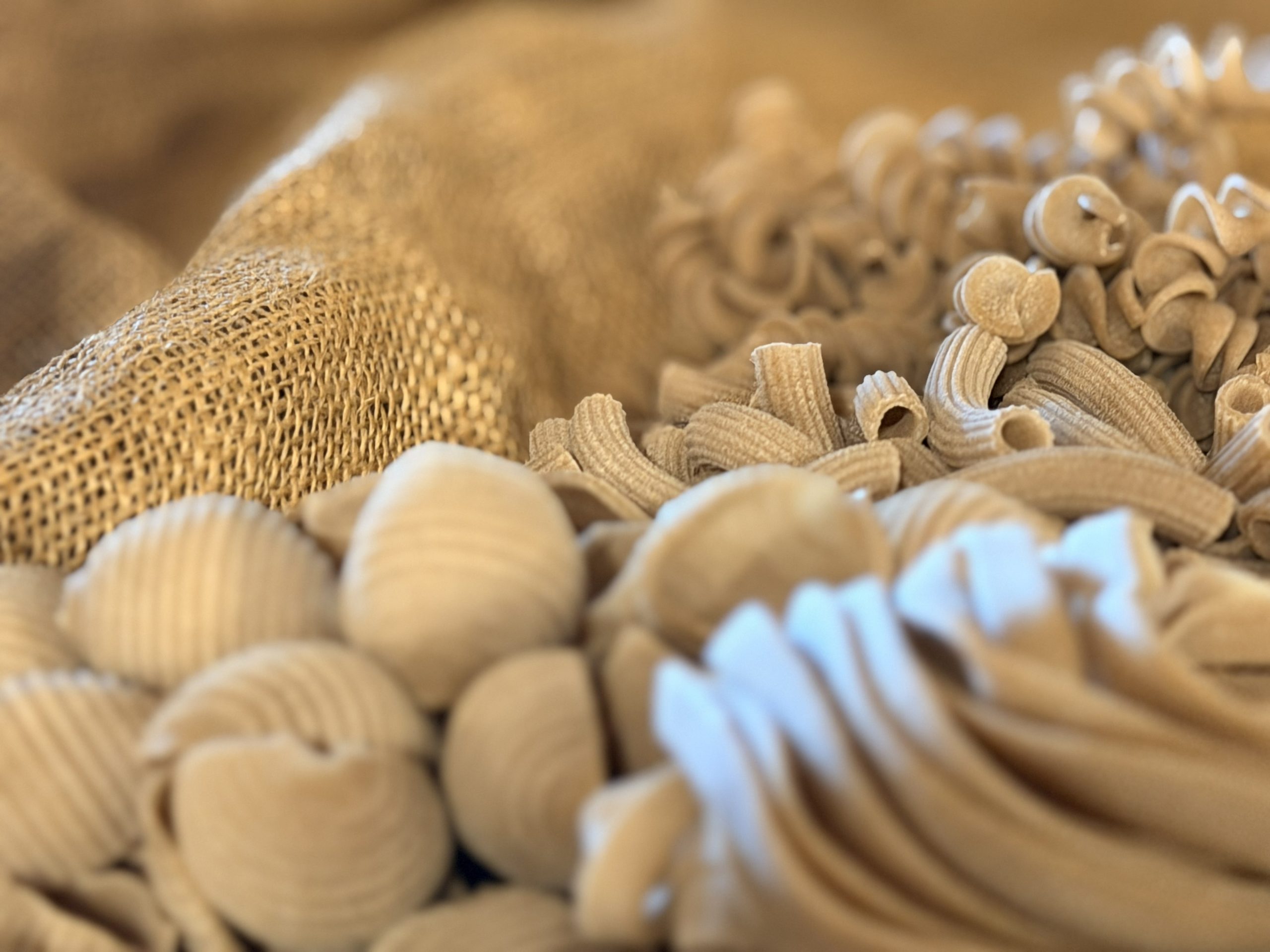
Our wheat is milled for us by Coralie at a small community mill before the flour heads to Ivano in Aboyne. He then turns it into all sorts of pasta shapes – tagliatelle, fusilli, caserecce, maccheroni and conchiglie – before it makes its way back to us at Ardross.
We also have our rustic wheat flour for anyone who would like to have a go at making something themselves.
One of the things I find particularly fascinating is how Ivano dries the pasta.
Commercial pasta can be dried in an oven in around four or five hours.
Ivano takes four days.
His pasta is dried much more traditionally in a drying room where the temperature naturally changes between day and night. The humidity changes too, and the pasta slowly dries alongside those changes.
There’s no rushing it.
And just as our wheat isn’t exactly the same every harvest, the conditions in Ivano’s drying room aren’t exactly the same every day either.
I think that’s part of what makes this project so interesting.
We’re not trying to make millions of identical packets of pasta. We’re taking wheat we’ve grown here in Fife, having it milled in Scotland and giving it to a small artisan pasta maker to see what he can make from that particular harvest.
And there will be little differences from year to year.
I think we’ve become so used to food being completely consistent that sometimes we forget the ingredients started off growing in a field.
This year’s wheat had different weather from last year’s. It grew in a different field. Next year’s will be different again.
In fact, when we first started making the pasta, we didn’t even grow our wheat specifically with pasta in mind. We used the wheat we were already growing on the farm.
Now that we know it works – and, more importantly, that people actually want to buy it! – we’d love to look at growing particular varieties in future and see where we can take it.
That’s one of the really exciting things about working directly with someone like Ivano. Rather than simply growing wheat and watching it disappear down the road on a lorry, we can start talking about what we’re growing, how it behaves and what we might do differently next year.
We’re learning as we go.
And I think that’s probably my favourite part of the whole thing.
The wheat starts in one of our fields. We grow it and harvest it. Coralie mills it. Ivano turns it into pasta. Then it comes all the way back to Ardross and onto the shelves of the farm shop.
And hopefully, not too long after that, onto your dinner table.
This year’s Ardross pasta is now back in the Farm Shop and available to order online.
We hope you enjoy this harvest.